
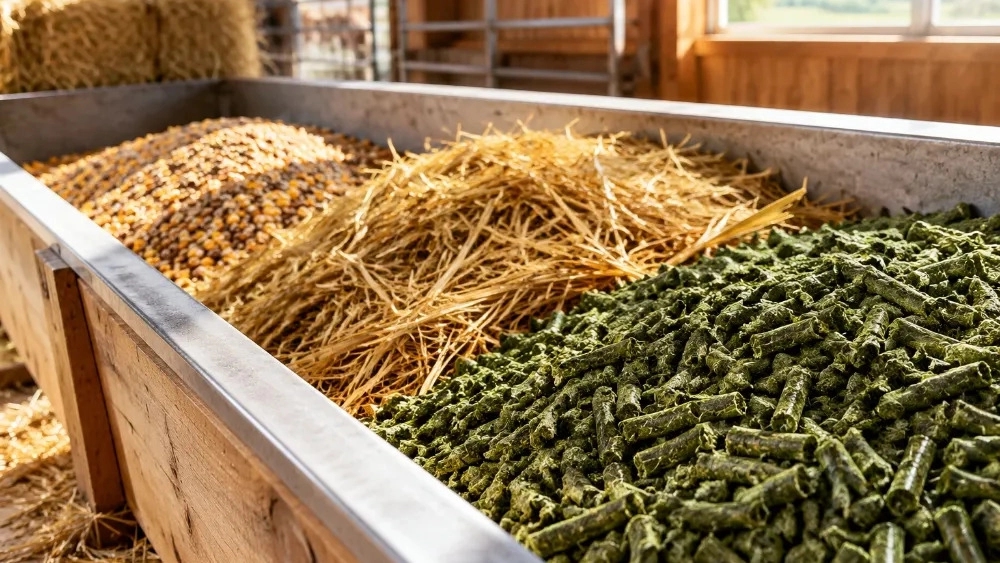
In such a situation, the production of high-quality animal feed for Garmsar livestock farmers becomes very important. Proper feed is the main basis of livestock growth, maintaining herd health, improving reproductive performance and supporting milk and meat production. When high-quality raw materials are selected and the feed production process is carried out based on scientific principles, the nutritional needs of livestock can be better managed and the wastage of food resources can be prevented.
The production of animal feed is not limited to the combination of a few raw materials; It also includes choosing the right ingredients, checking the nutritional value, quality control, observing hygiene principles, adjusting the ration and maintaining the product properly. Any weakness in these stages may reduce the final quality of feed and negatively affect livestock performance.
In this article, we examine the process of producing high-quality animal feed for Garmsar livestock farmers, the characteristics of suitable raw materials, the principles of ration regulation, quality control methods and the importance of choosing a reliable supplier. Also, we discuss the role of Garmsar and Aradan nomadic animal feed collection in introducing nutritional solutions that suit the needs of livestock farmers in the region.
Why is the production of high-quality animal feed important for livestock farmers in Garmsar?
Proper nutrition is one of the most important factors affecting the economic success of animal husbandry. Livestock need energy, protein, fiber, minerals, vitamins and healthy water to maintain the normal function of the body, growth, reproduction and production of livestock products.
If the food ration cannot meet these needs, the animal may face reduced growth, reduced body condition, reduced milk production, or impaired reproductive performance. On the other hand, excessive use of certain foods does not necessarily increase productivity and can increase feeding costs or cause digestive problems.
Production of high-quality animal feed for Garmsar livestock farmers should be done based on knowing the real needs of animals and breeding conditions. Livestock farmers in this area may need special feed for sheep, goats, dairy cows, fattening cows or growing livestock based on their type of activity. Each group of livestock has different characteristics and nutritional needs.
Therefore, the production of suitable feed should be done according to the type of animal, age, weight, stage of production and quality of other food sources. This approach can help in better management of feed consumption and more effective use of available resources.
Raw materials used in the production of animal feed
The quality of raw materials is one of the most important factors determining the quality of the final feed. Even the best production methods cannot fully compensate for the weakness of poor quality or contaminated raw materials. For this reason, the selection and evaluation of inputs must be done before the start of the production process.
Grains and sources of energy supply
However, the amount of grain use should be determined based on the type of animal, physical condition, fodder quality and breeding purpose. A sudden or excessive increase in the share of grains in the diet, especially in ruminants, can increase the risk of digestive disorders such as acidosis.
In the process of producing high-quality animal feed for Garmsar livestock farmers, it is very important to choose healthy grains, free from contamination and with proper storage conditions. Improper humidity, fungal contamination and improper storage can reduce the nutritional value of these materials.
Protein sources
Protein plays an important role in growth, regeneration of body tissues, milk production and normal functioning of different body systems. For this reason, suitable protein sources are used in many animal diets to complete the food composition.
The selection of protein sources should be done based on nutritional value, digestibility, health of raw materials and their compatibility with other diet components. The amount of protein needed by livestock also depends on factors such as age, weight, pregnancy stage, lactation and growth rate.
In the production of animal feed, paying attention to the balance between energy and protein is particularly important. Having a lot of protein without providing enough energy does not necessarily improve livestock performance; Therefore, the formulation should be based on the actual needs of the animal.
Fodder and sources of fiber supply
The quality of fodder depends on factors such as harvesting stage, amount of leaves, drying conditions, humidity, natural smell and storage method. Moldy or contaminated forage may pose a health hazard and should not be consumed without proper evaluation.
In the production of high-quality animal feed for Garmsar livestock farmers, a balance should be established between concentrate feed and fiber sources. Concentrate cannot replace suitable fodder in all conditions; Because the needs of the rumen and the health of the digestive system should be considered in the design of the diet.
Minerals and vitamin supplements
The use of mineral and vitamin supplements should be based on the composition of the diet and the real needs of the animal. Arbitrary consumption of supplements or combining several products without checking the amount of nutrients can cause nutritional imbalance.
In the production of animal feed, accurate measurement and uniform distribution of supplements is very important; Because some minerals are consumed in small amounts and the error in adding them can affect the quality of the final product.
Production steps of high-quality animal feed for Garmsar livestock farmers
Production of standard animal feed is a series of continuous steps, each of which affects the quality of the final product. The correct implementation of these steps can help to increase the uniformity of the feed, maintain the nutritional value and reduce pollution.
Selection and evaluation of raw materials
The first step is to choose healthy raw materials suitable for the desired formulation. Raw materials should be checked for appearance, smell, humidity, possible contamination and storage conditions.
If needed, sampling and specialized tests can provide more detailed information about the nutritional composition and health of the ingredients. For example, it is very important to measure humidity and check for fungal contamination in some raw materials.
Production of high-quality animal feed for livestock farmers in Garmsar can lead to favorable results when raw materials are evaluated based on specific criteria before entering the production line.
Grinding raw materials
Grinding helps to reduce the particle size of raw materials and can affect uniformity of mixing and availability of nutrients. However, the size of the particles should be chosen according to the type of livestock and the purpose of production.
Excessive grinding in some diets may cause problems in digestion and rumen health. On the other hand, too coarse particles may make uniform mixing difficult.
Therefore, the size of the mill should be determined based on the characteristics of the raw materials, the type of product and the nutritional needs of the animal.
Formulation and regulation of food composition
Formulation is one of the most sensitive stages of animal feed production. At this stage, the amount of each raw material is determined based on its nutritional value and animal needs.
In order to adjust the appropriate formula, information such as usable energy, protein, fiber, minerals, forage quality and stage of animal production must be considered. It is also necessary to check the limitations of some raw materials and the possibility of undesirable compounds.
In the production of high-quality animal feed for livestock farmers in Garmsar, the use of basic formulations can prevent the deficiency or excess consumption of some nutrients. This process is better to be done with the cooperation of an animal nutritionist and based on reliable information.
Mixing raw materials
After determining the formula, the raw materials must be mixed together in such a way that the different components are evenly distributed throughout the product.
Controlling the mixing time, the order of adding materials, the capacity of the machine and the condition of the equipment can help to improve the uniformity of the product.
Shaping and production of final feed
Depending on the type of product, the feed may be supplied in the form of flour, pellets or other forms. The choice of the production method depends on the combination of raw materials, the type of livestock, the purpose of consumption and production facilities.
Pelletized feed can have advantages in terms of ease of transportation, storage and distribution; But the quality of pellets depends on factors such as the composition of raw materials, particle size, humidity and process conditions.
The appearance of the product alone is not a sufficient criterion to measure the quality. Food composition, raw material health and product uniformity should also be checked.
Cooling, packaging and storage
In products whose production process is associated with an increase in temperature, proper cooling before packaging is important. Hot or wet food packaging can provide the basis for creating unfavorable humidity and quality loss.
Packaging should protect the feed against pollution, moisture and environmental damage. Also, the place of storage should be dry, clean and have suitable conditions.
Finally, the produced product should be evaluated in terms of quality and health based on the requirements related to the type of feed and applicable standards.
Quality control in animal feed production
Quality control is one of the main foundations of animal feed production. Even if the formulation is suitable, poor storage of raw materials, mixing or packaging can reduce the quality of the final product.
Checking the nutritional value of the product
Evaluation of food ingredients helps the manufacturer to determine whether the product conforms to the prescribed formulation or not. Investigations such as measuring raw protein, moisture, fiber and other related indicators can be effective in evaluating feed quality.
The type of tests should be determined according to the nature of the product and possible risks. For some raw materials, the investigation of fungal contamination and fungal toxins is also of particular importance.
Product uniformity control
Uniformity of the feed means that the nutrients are properly distributed in different parts of the product. This feature is very important in mixed feeds and products that have mineral or vitamin supplements.
Controlling the performance of mixing devices, observing the order of adding ingredients, and periodically checking the product can help reduce the difference between different parts of the feed.
Compliance with health principles
Production environment, equipment, storage of raw materials and packaging must be managed in terms of hygiene. Cross-contamination between raw materials, the entry of pests and the contact of feed with moisture can endanger the health of the product.
The manufacturer must have a specific plan for cleaning equipment, checking warehouses and managing suspected contamination. These measures help to maintain the quality of feed in different stages of production.
The influence of Garmsar climatic conditions on the production and consumption of animal feed
The climatic conditions of Garmsar and its surrounding areas make planning for production, storage and distribution of feed more important. High temperature in some seasons, water limitation and changes in vegetation can affect the nutritional needs and how to store inputs.
Feed management in hot periods of the year
In hot weather, animals may face heat stress and their feed consumption pattern will change. In such a situation, access to safe water, shade, proper ventilation and feeding time management are important.
Also, the quality of the stored feed should be checked regularly; Because improper storage in hot conditions can increase the possibility of quality loss of some inputs.
Planning for fodder shortages
In the periods when pasture vegetation decreases, the use of fodder reserves and supplementary feed should be planned. Estimating the needs of the herd and preparing feed before the shortage occurs can prevent sudden changes in the ration.
In this context, the production of high-quality animal feed for Garmsar livestock farmers should be done based on understanding the needs of the region and the type of livestock raised.
Attention to the conditions of nomadic animal husbandry
Part of animal husbandry activities in the region is associated with moving herds and limiting maintenance facilities. In such a situation, feed portability, packaging durability, ease of storage and access to suitable inputs become important.
The selected feed must be suitable in terms of food ingredients and at the same time it can be stored and consumed without loss of quality, according to the conditions of animal husbandry.
The difference between the nutritional needs of light and heavy livestock
One of the important points in the production of animal feed is to pay attention to the difference in the nutritional needs of different species. Sheep and goats are small ruminants and cows are large ruminants. However, nutritional needs in each group are also different based on age, weight, stage of production and breeding purpose.
Production of feed for sheep and goats
In the production of light animal feed, attention should be paid to the needs of energy, protein, fiber and minerals. Growing lambs, pregnant ewes, and lactating cattle may require rations with a different composition.
Also, pasture conditions and the quality of consumed fodder affect the amount of supplementary feed needed. For this reason, a fixed formula is not always suitable for all herds.
Production of feed for dairy and fattening cows
Dairy cows need a diet that provides the energy and protein necessary for milk production, while meeting the maintenance needs. On the other hand, in fattening cows, it is more important to meet the needs of growth and weight gain in the framework of a balanced diet.
The difference in the nutritional needs of these animals shows that feed formulation should be done according to the type of animal and the purpose of breeding. Using special food for one group for another group, without expert examination, can cause nutritional imbalance.
Solutions to reduce waste and improve animal feed productivity
One of the important goals of producing high-quality feed is to increase the productivity of food resources and reduce waste. This goal is pursued through the management of raw materials, regulation of ration and proper storage of feed.
Selection of raw materials suitable for the formula
Using healthy raw materials with specific nutritional value helps the producer to adjust the feed composition more precisely. Changing the raw materials without modifying the formulation may disturb the nutritional balance of the product.
Therefore, any substitution in raw materials should be done based on its nutritional value and technical characteristics.
Reducing wastage in storage and during consumption
Improper storage, tearing of packaging, moisture penetration and access by pests can cause food waste. In the stage of consumption, inappropriate distribution and long remaining of feed in unfavorable conditions may reduce its quality.
Using the right warehouse, checking stocks regularly and planning carefully for consumption can prevent these problems.
Adjusting the ration based on the actual needs of the livestock
Overeating, in addition to increasing the consumption of inputs, may cause a disturbance in the nutritional balance. On the other hand, insufficient supply of nutrients can limit the growth and production of livestock.
The best approach is to adjust the ration based on the actual needs of the livestock and periodically evaluate its performance. Recording information related to feed consumption, changes in weight and physical condition can be effective in modifying the nutrition plan.
Nomadic animal feed of Garmsar and Aradan; Accompanying livestock farmers in choosing the right feed
Choosing the right supplier is an important part of the animal feed procurement process. In addition to product quality, livestock farmers need detailed information about food ingredients, how to consume, storage conditions and compatibility of feed with the type of animal.
Garmsar and Aradan nomadic livestock feed can focus on the real needs of livestock farmers in the region and the importance of choosing inputs based on the principles of introducing and marketing products related to livestock nutrition.
In this context, providing clear information about products, paying attention to the quality of raw materials and introducing feed suitable for the needs of light and heavy livestock can help customers make more informed decisions.
Garmsar and Aradan livestock farmers should first determine the type of livestock, age, production status and quality of available fodder to choose the right feed. Then, based on this information, choose a product that matches the nutritional needs of the herd.
Also, it is important to pay attention to the way of packaging, its storage conditions and instructions for using the product. Food that is suitable in terms of ingredients may lose its quality if it is stored improperly.
For the professional introduction of Garmsar and Aradan nomadic animal feed collection, emphasis on verifiable quality of products, transparency of technical information and appropriate response to the needs of livestock farmers can help to strengthen the trust of customers. In this way, expressing the real characteristics of the products and avoiding unproven claims plays an important role in creating a stable relationship with the audience.
Characteristics of a reliable animal feed producer
Choosing the right manufacturer should be done based on technical and executive criteria. Product quality, transparency of specifications, control of raw materials and compliance with health principles are among the most important evaluation criteria.
Transparency in the introduction of feed ingredients
The manufacturer must provide verifiable information about the type of product and its nutritional composition. This information helps the farmer to adapt the product to the needs of his herd and avoid disproportionate selection.
Attention to quality control
The presence of specific processes for raw material evaluation, mixing control, final product inspection and warehouse management can help maintain feed quality.
Provide consumption guide
Livestock feed should be used according to the purpose of consumption and nutritional needs. Providing clear guidance on consumption and storage helps to reduce nutritional errors and maintain product quality.
Understanding the needs of local livestock farmers
summary
Production of high-quality animal feed is a specialized process that begins with the selection of healthy raw materials and continues until formulation, grinding, mixing, packaging, quality control and storage. Each of these steps has an effect on the nutritional value, health and uniformity of the final product.
Production of high-quality animal feed for Garmsar livestock farmers should be done according to the type of animal, age, weight, production stage, fodder quality and climatic conditions of the region. Choosing healthy grains, suitable protein sources, high-quality fodder, and required supplements, along with basic ration regulation, can help to better meet the animal's nutritional needs.
Also, compliance with hygiene principles, humidity control, prevention of contamination and proper storage of feed are important factors in maintaining product quality. Livestock farmers should also pay attention to healthy water, livestock keeping conditions and periodic assessment of herd condition, in addition to choosing the right feed.
Meanwhile, Garmsar and Aradan nomadic animal feed can play an effective role in the specialized content and marketing of livestock nutrition by introducing products that suit the needs of livestock owners, providing clear information and emphasizing the conscious selection of inputs.
Finally, the combination of principled production of feed, correct selection of inputs, scientific management of ration and proper storage of the product provides the basis for improving livestock productivity and more effective use of food resources. Paying attention to these principles can help to maintain the health of the herd, support the production of livestock products and the sustainable development of livestock farmers in Garmsar and Aradan.